
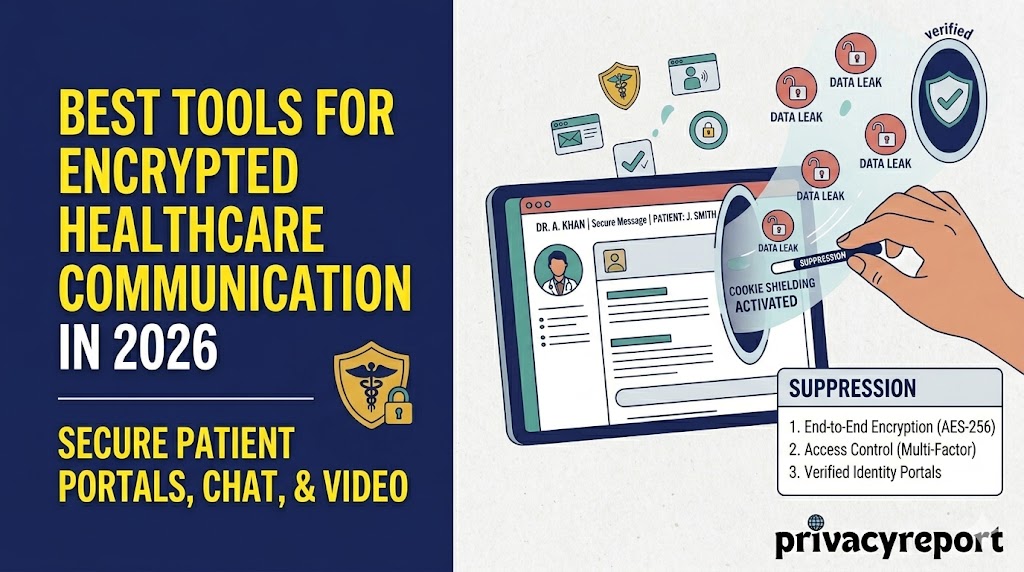
Introduction: Why Encrypted Healthcare Communication Is No Longer Optional
In today’s digitally connected healthcare landscape, protecting patient information during communication is not just a best practice — it is a legal and ethical imperative. With cybersecurity threats growing more sophisticated every year, healthcare providers, hospitals, and clinics face an increasingly urgent challenge: how do you communicate quickly, efficiently, and securely without putting sensitive patient data at risk?
The answer lies in encrypted healthcare communication tools — purpose-built platforms designed to keep Protected Health Information (PHI) confidential while enabling seamless collaboration across care teams.
Secure messaging in healthcare refers to using encrypted text messaging solutions designed to ensure compliance with confidentiality regulations like HIPAA. Unlike standard messaging apps, these platforms protect sensitive patient information through advanced security measures, such as end-to-end encryption and role-based access controls.
This article breaks down the best tools for encrypted healthcare communication available today, covering secure messaging apps, encrypted email solutions, and collaboration platforms — all with a focus on HIPAA compliance, encryption standards, and real-world usability.
What Makes a Healthcare Communication Tool “Encrypted” and HIPAA-Compliant?
Before diving into the tools, it’s important to understand what separates a genuinely secure healthcare communication platform from a generic messaging app.
The primary features of a HIPAA-compliant platform include end-to-end encryption ensuring messages are protected both in transit and at rest, role-based access controls restricting sensitive information to authorized users, audit logs maintaining detailed records of all communication activities, configurable data retention policies, and Business Associate Agreements (BAAs) signed between vendors and healthcare providers.
Additionally, standard Gmail and Outlook are not compliant out of the box. The free versions of these services don’t provide the security controls or business agreements required for healthcare use, and even enterprise plans don’t automatically encrypt messages containing patient information — additional security measures are required.
The bottom line: if your communication tool isn’t purpose-built for healthcare or doesn’t include a signed BAA, it’s a compliance liability.
The 8 Best Tools for Encrypted Healthcare Communication
1. TigerConnect — Best for Large Healthcare Organizations
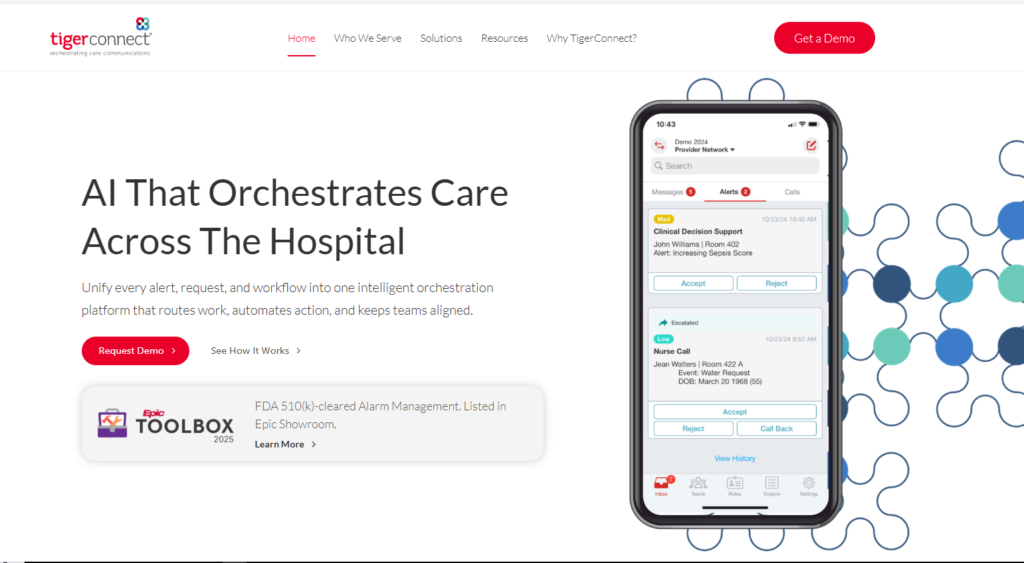
TigerConnect is widely regarded as one of the most comprehensive encrypted communication platforms built specifically for healthcare. It offers secure messaging, video calls, and file sharing, designed specifically for healthcare communication. It includes real-time message delivery and team collaboration, which makes it ideal for large healthcare organizations.
Key Features:
- End-to-end encrypted messaging, voice, and video
- Role-based access controls
- EHR integrations
- Real-time care team collaboration
- HIPAA-compliant audit trails
Best For: Health systems, hospitals, and large ambulatory care networks needing robust, scalable encrypted communication.
2. Imprivata Cortext — Best for EHR Integration
Imprivata Cortext is a secure communication platform for healthcare providers, offering messaging, calling, and deep integration with EHR systems. This makes it a strong choice for organizations that want their secure communication layer to connect directly with their clinical records system, eliminating the need to switch between applications.
Key Features:
- Secure HIPAA-compliant messaging and calling
- Deep EHR integration
- Mobile and desktop support
- Single sign-on capabilities
Best For: Clinical teams that need encrypted messaging tightly woven into their existing EHR workflows.
3. Notifyre — Best for Encrypted SMS and Secure Fax
Notifyre is a top-rated secure messaging platform that enables businesses to send and receive HIPAA-compliant SMS and fax communications effortlessly. With AES 256-bit data encryption, two-factor authentication, and detailed audit logs, it provides a secure and compliant way to communicate with patients and clients.
Its dual capability — covering both encrypted texting and HIPAA-compliant faxing — makes it uniquely versatile for healthcare settings that still rely on traditional fax workflows alongside modern messaging.
Key Features:
- AES 256-bit encryption at rest and in transit
- TLS encryption for secure data transmission
- Multi-factor authentication (2FA) and role-based access
- Advanced audit logs and real-time message tracking
- Legally binding BAA
Best For: Healthcare practices needing both secure SMS and HIPAA-compliant faxing in a single platform.
4. Updox — Best for Patient-Facing Communication
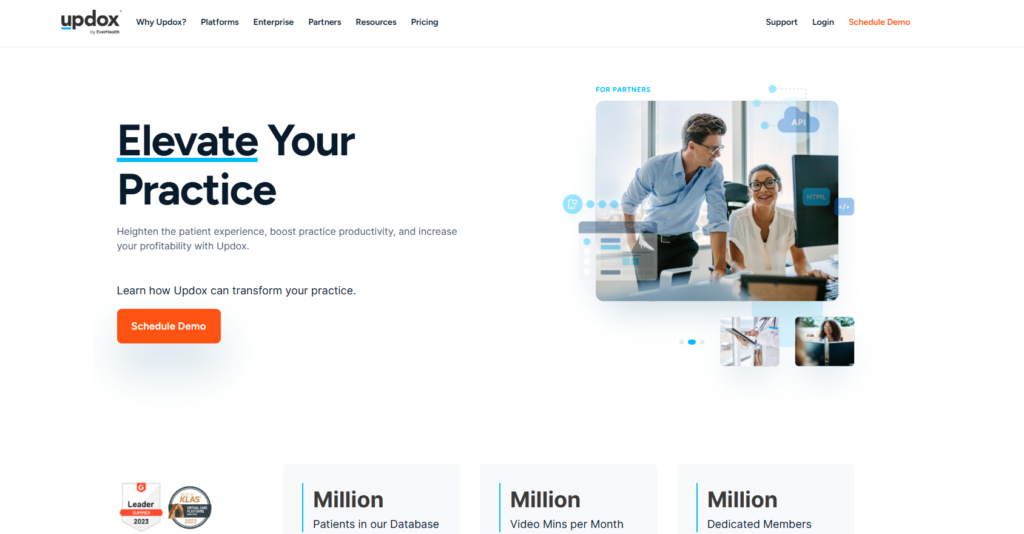
Updox leads the way in secure provider-to-patient communication, offering encrypted messaging, secure virtual appointments, and digital faxing — all while ensuring HIPAA compliance. It stands out for its focus on the patient experience and its ability to integrate with most major EHR platforms.
Key Features:
- HIPAA-compliant secure texting
- Encrypted virtual visits
- Digital fax and direct messaging
- EHR integration
- Patient engagement tools
Best For: Primary care practices and outpatient clinics looking to improve patient engagement without sacrificing data security.
5. iPlum — Best for HIPAA-Compliant Calling and Texting
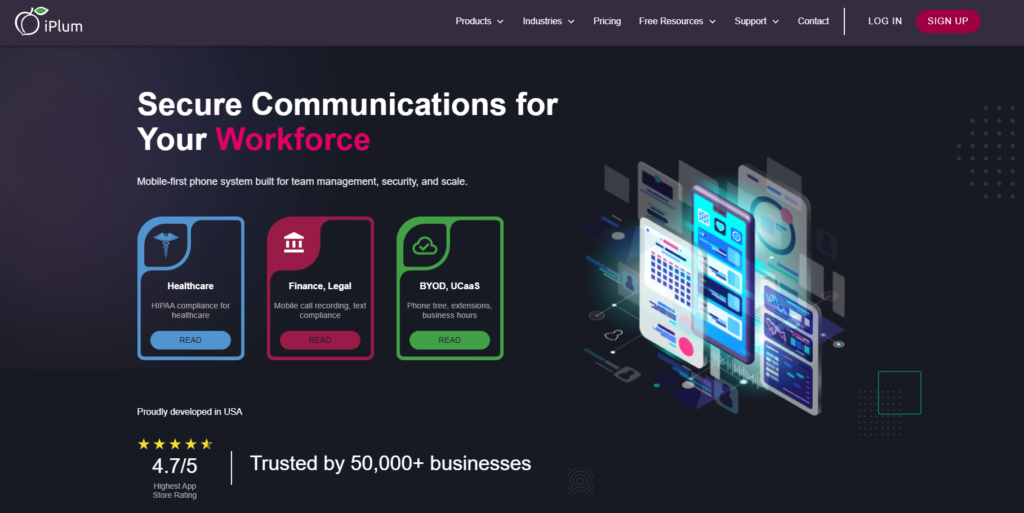
iPlum offers HIPAA-compliant communication tools built for the unique needs of healthcare professionals. Its secure texting and calling features, backed by end-to-end encryption, ensure that patient data remains confidential at all times. The platform also includes a signed BAA, providing additional compliance assurance for healthcare organizations.
It also includes password protection, two-factor authentication, and audit trails — a complete security toolkit for smaller practices that need enterprise-grade protection on a budget.
Key Features:
- End-to-end encrypted calls and texts
- Two-factor authentication
- Password-protected access
- Detailed audit trails
- BAA included
Best For: Independent practitioners, telehealth providers, and small clinics needing encrypted calling and texting without a large IT infrastructure.
6. Hushmail — Best Encrypted Email for Healthcare
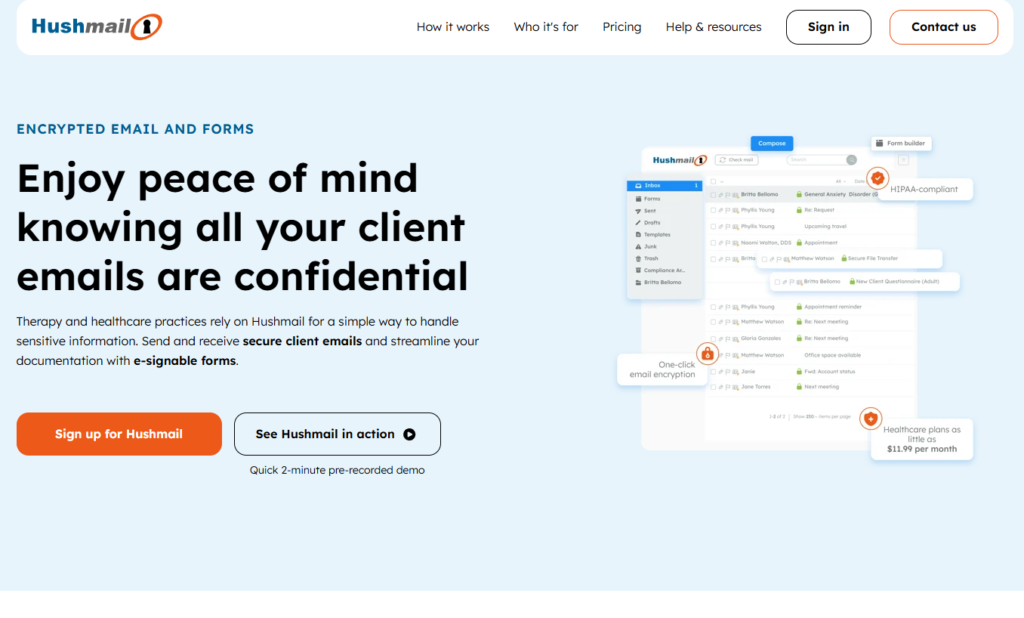
For organizations where email remains the primary communication channel, Hushmail offers a purpose-built HIPAA-compliant encrypted email solution. Emails sent between Hushmail users are end-to-end encrypted, and messages sent to outside recipients are delivered via a secure web portal. The platform also includes a secure web form builder, allowing providers to create intake forms, questionnaires, and consent documents with electronic signature fields.
Key Features:
- End-to-end encrypted email between users
- Secure portal delivery for external recipients
- Secure web forms and e-signature support
- HIPAA-compliant plan with BAA
- Mobile and web access
Best For: Mental health professionals, therapists, and small practices where email communication with patients is the primary touchpoint.
7. PerfectServe (formerly Telmediq) — Best for Clinical Care Coordination
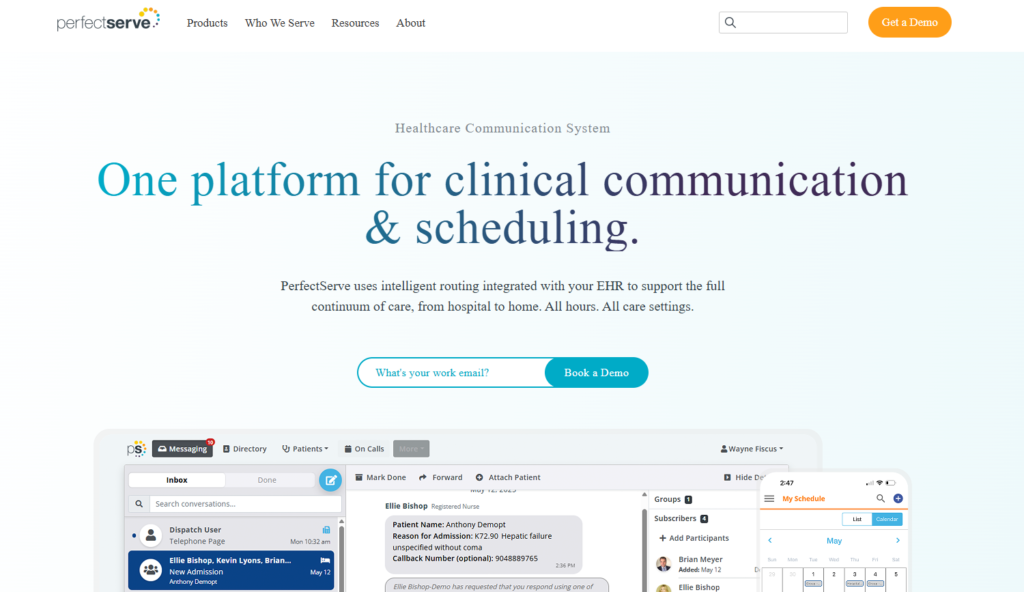
PerfectServe is a clinical communication and collaboration solution designed to enhance care team coordination with secure messaging, voice, and video. Its strengths lie in streamlining communication across large, complex care teams — making it particularly valuable for inpatient hospital environments where coordinating multiple departments is critical.
Key Features:
- Encrypted voice, video, and messaging
- On-call scheduling integration
- Secure patient handoff communication
- EHR and nurse call system integrations
Best For: Hospitals and inpatient facilities focused on care team coordination and reducing communication breakdowns.
8. Tresorit — Best for Secure Document Sharing in Healthcare
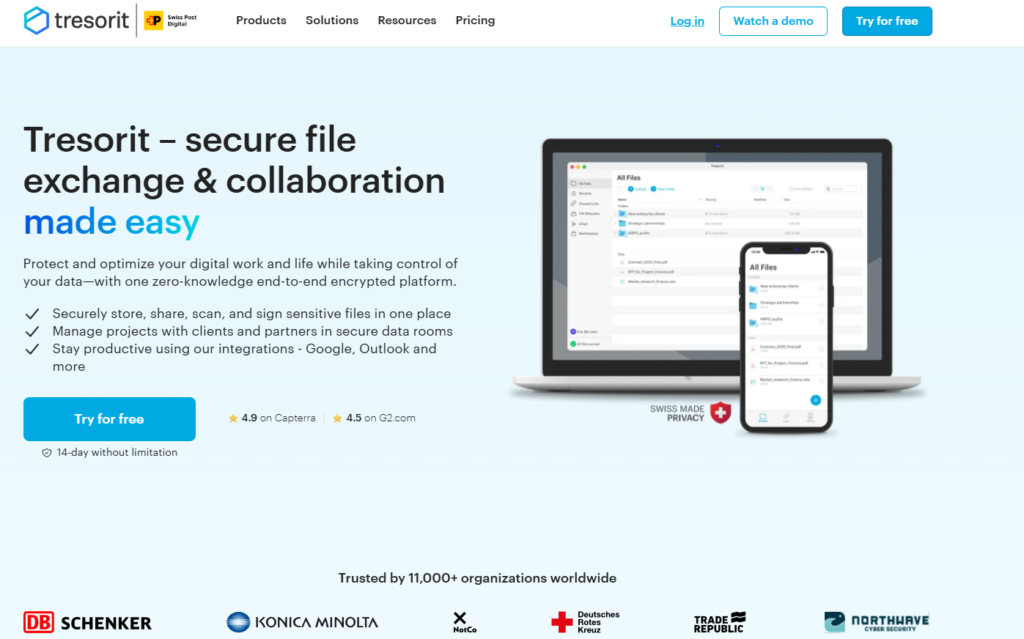
When it comes to sharing sensitive files such as medical records, lab results, and imaging reports, Tresorit provides a leading encrypted cloud storage and file-sharing solution. It offers end-to-end encryption ensuring only authorized users can access stored files, granular access controls, secure collaboration tools, and audit trails to track document access and changes.
Key Features:
- End-to-end encrypted file storage and sharing
- Granular access controls
- Audit trails for document activity
- Integrations with Outlook, Gmail, OneDrive, Slack, and Teams
- HIPAA-compliant with BAA available
Best For: Healthcare organizations that need to securely share sensitive documents internally and with external partners.
Key Encryption Standards You Should Know
When evaluating any healthcare communication tool, look for these encryption standards:
Advanced encryption algorithms such as AES-256 and post-quantum algorithms secure patient data against evolving threats and align with HIPAA requirements. Zero-trust security models require continuous verification of users and devices, replacing outdated perimeter-based access systems. AI-enhanced encryption and threat detection optimize encryption levels in real time, identify unusual access patterns, and predict potential breaches before they occur.
Understanding these standards helps healthcare IT leaders make informed procurement decisions rather than relying solely on vendor marketing claims.
Encrypted Email vs. Secure Messaging: Which Does Your Organization Need?
Many healthcare organizations need both — but they serve different purposes. Secure messaging platforms are built for real-time, team-based clinical communication, while encrypted email is better suited to patient-facing correspondence, referrals, and documentation that benefits from a formal record trail. Many platforms also support direct integration with EHR systems, allowing patient data to be shared securely without switching between applications.
The general rule: use encrypted messaging for rapid, in-the-moment clinical coordination; use encrypted email for structured, patient-facing communication that requires documentation.
Why Generic Apps Like WhatsApp and Standard Email Are a Liability
Consumer communication tools were never designed with healthcare compliance in mind. Regulators scrutinize every PHI touchpoint, and even an unintentional text sent through a consumer app can trigger a costly HIPAA violation. The risk extends beyond regulatory fines — data breaches in healthcare erode patient trust, damage institutional reputation, and in worst-case scenarios, can compromise patient safety when sensitive clinical information is exposed or intercepted.
Purpose-built platforms deliver encrypted chat, role-based access, and audit trails. By standardizing on HIPAA-compliant communication tools, healthcare organizations eliminate shadow IT and reduce the risk of PHI exposure through uncontrolled communication channels.
The Future of Encrypted Healthcare Communication
The landscape is evolving rapidly. Telemedicine platforms are increasingly benefiting from end-to-end encryption protocols that secure everything from video consultations to digital prescriptions and remote monitoring data, ensuring PHI remains protected across all communication channels. AI-powered encryption is also emerging as a powerful layer of defense — providing adaptive security that encrypts patient communications in real time while monitoring for unauthorized access or eavesdropping.
Healthcare organizations that invest in modern encrypted communication infrastructure today will be better positioned to adopt emerging technologies — including AI diagnostics and Internet of Medical Things (IoMT) devices — without creating new security vulnerabilities.
How to Choose the Right Encrypted Healthcare Communication Tool
When evaluating platforms, consider these six critical factors:
1. HIPAA Compliance and BAA Availability — Never deploy a tool without a signed Business Associate Agreement. This is non-negotiable.
2. Encryption Strength — Look for AES-256 encryption both at rest and in transit, plus TLS for all data transmission.
3. EHR Integration — The platform should integrate with your existing Electronic Medical Records system to streamline workflows and reduce manual data handling.
4. Audit Logging — Detailed audit logs are necessary for tracking user activities and file exchanges, supporting intrusion detection and compliance verification.
5. Ease of Use — A platform that clinicians find cumbersome will be abandoned in favor of less secure consumer alternatives. Adoption is itself a security issue, not just a UX one.
6. Multi-Compliance Support — Leading healthcare organizations increasingly adopt frameworks that cover HIPAA, NIST, SOC 2, and GDPR simultaneously, future-proofing their compliance posture.
Conclusion
Encrypted healthcare communication is the foundation of a secure, compliant, and efficient modern healthcare organization. Whether you’re a solo practitioner looking for a HIPAA-compliant texting solution, a hospital system needing enterprise-wide care team collaboration, or an outpatient clinic focused on better patient engagement, there is a purpose-built tool in this list for your needs.
The most important step is to stop using unencrypted, consumer-grade tools for any communication that touches patient data — and to replace them with platforms that include end-to-end encryption, detailed audit trails, role-based access, and a signed BAA.
Investing in the right encrypted communication infrastructure is not just about regulatory compliance. It is about honoring the trust that patients place in you every time they share their most sensitive health information.
Leave a Reply