
What Are the Government-Released Epstein Files?
The Epstein files are a massive collection of declassified government documents, records, videos, images, flight logs, FBI interview summaries, financial records, and investigative materials related to convicted sex offender and financier Jeffrey Epstein and his associate Ghislaine Maxwell. These documents were collected and released by the United States Department of Justice following a historic law passed by Congress.
On November 19, 2025, the Epstein Files Transparency Act was signed into law, requiring the Attorney General to make publicly available in a searchable and downloadable format all unclassified records, documents, communications, and investigative materials in the possession of the Department of Justice relating to Jeffrey Epstein.
In total, the DOJ identified six million pages of evidence. So far it has released 3.5 million pages, including some 180,000 images and 2,000 videos. The pages consist of email chains, text messages, internal investigative reports, news articles, bank statements, wire transfer records, flight logs, and FBI interview summaries.
This is one of the largest government document releases in modern American history, and it is entirely free and publicly accessible to anyone with an internet connection.
The Legal Background: The Epstein Files Transparency Act
Understanding the law behind the release helps you understand what is available and what may still be withheld.
In November 2025, the U.S. House of Representatives passed the Epstein Files Transparency Act, and the U.S. Senate unanimously approved it, with President Donald Trump signing the bill into law the next day.
The House of Representatives voted 427 to 1 to pass the act on November 18, 2025, with Republican representative Clay Higgins of Louisiana casting the lone nay vote.
The law required the Attorney General to release flight logs and travel records including manifests, itineraries, pilot records, and customs or immigration documentation for any aircraft owned or used by Epstein, individuals including government officials named or referenced in connection with Epstein’s criminal activities, any immunity deals, non-prosecution agreements, or sealed settlements involving Epstein or his associates, and internal DOJ communications concerning decisions to investigate or decline to investigate Epstein or his associates.
The law also specified that no record shall be withheld, delayed, or redacted on the basis of embarrassment, reputational harm, or political sensitivity, including to any government official, public figure, or foreign dignitary.
The files were collected from five primary sources including the Florida and New York cases against Epstein, the New York case against Maxwell, the New York cases investigating Epstein’s death, the Florida case investigating a former butler of Epstein, multiple FBI investigations, and the Office of Inspector General investigation into Epstein’s death.
Timeline of Government Epstein File Releases
Here is a chronological breakdown of every major release so you know what has been made public and when.
September 2, 2025 — House Oversight Committee Release
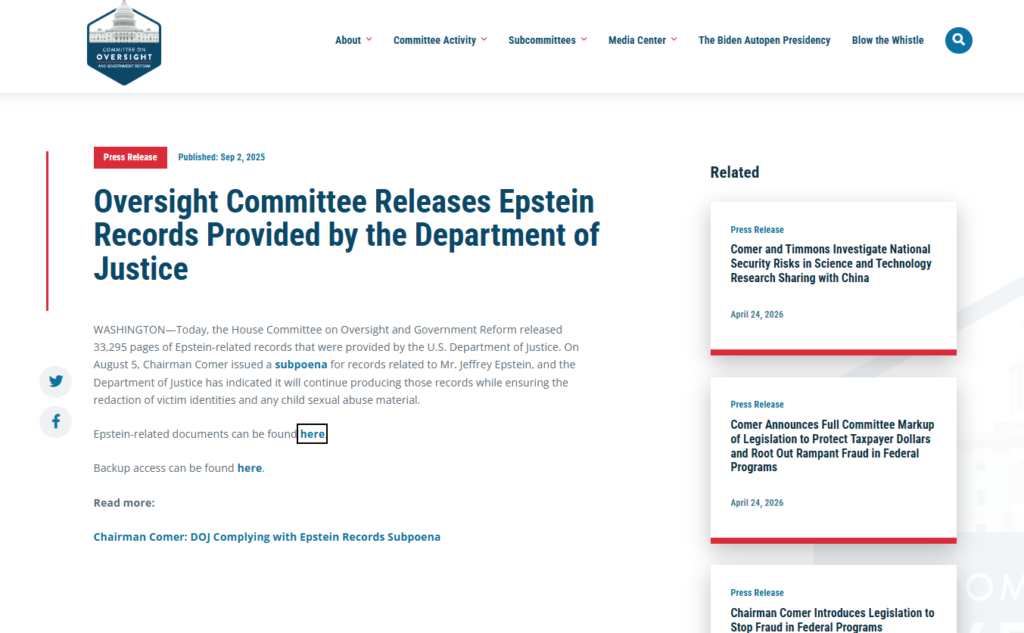
The House Committee on Oversight and Government Reform released 33,295 pages of Epstein-related records that were provided by the U.S. Department of Justice. On August 5, Chairman Comer had issued a subpoena for records related to Jeffrey Epstein.
December 19, 2025 — First DOJ Release Under the Transparency Act
The DOJ released an initial batch of heavily redacted files on December 19, 2025, the deadline set by the Epstein Files Transparency Act. The release drew bipartisan criticism for failing to meet the law’s requirements, with over 500 pages being entirely blacked out.
The DOJ had also been sharing files since February 2025, when it published more than 100 pages related to the Epstein probe, including flight logs, a redacted contact book, masseuse list, and an evidence list. In July 2025, the department shared a memo that concluded Epstein died by suicide in prison and had no client list.
January 30, 2026 — Largest Release: 3.5 Million Pages
The Department of Justice published over 3 million additional pages responsive to the Epstein Files Transparency Act. More than 2,000 videos and 180,000 images are included. Combined with prior releases, this makes the total production nearly 3.5 million pages released in compliance with the Act.
Unlike previous releases, the Justice Department’s webpage for this fifth release cannot be accessed until visitors confirm they are at least 18 years old due to the inclusion of pornography within the released files.
How to View the Epstein Files: Step-by-Step Guide
Method 1: The Official DOJ Epstein Library (Primary Source)
This is the most authoritative and complete source for the government-released Epstein files. It is run directly by the United States Department of Justice.
Step 1: Go to the official DOJ Epstein Library
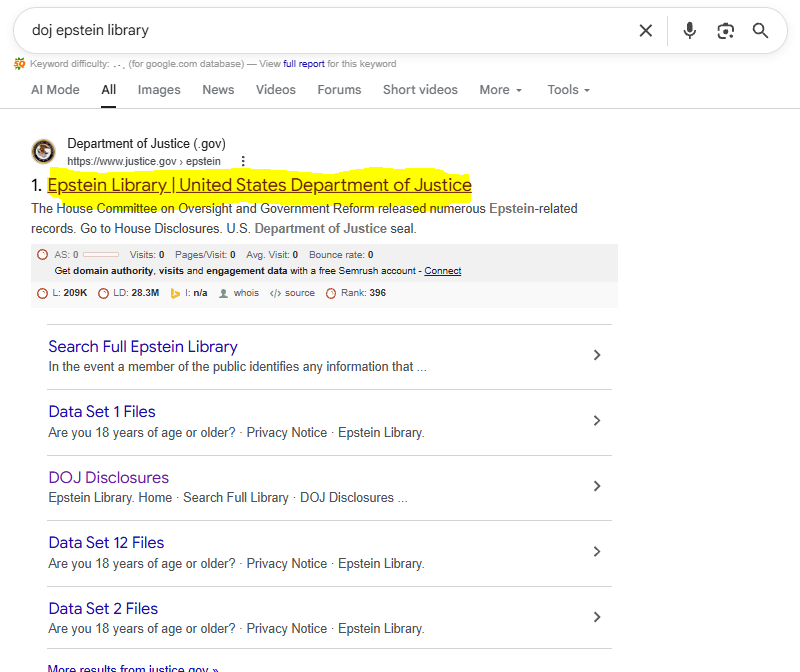
Open your browser and search for “DOJ Epstein Library” or “Justice.gov Epstein” on Google. Click the official Department of Justice result. The main hub for all Epstein-related document releases is on the DOJ’s official government website under the Epstein section.
Step 2: Read and accept the age verification
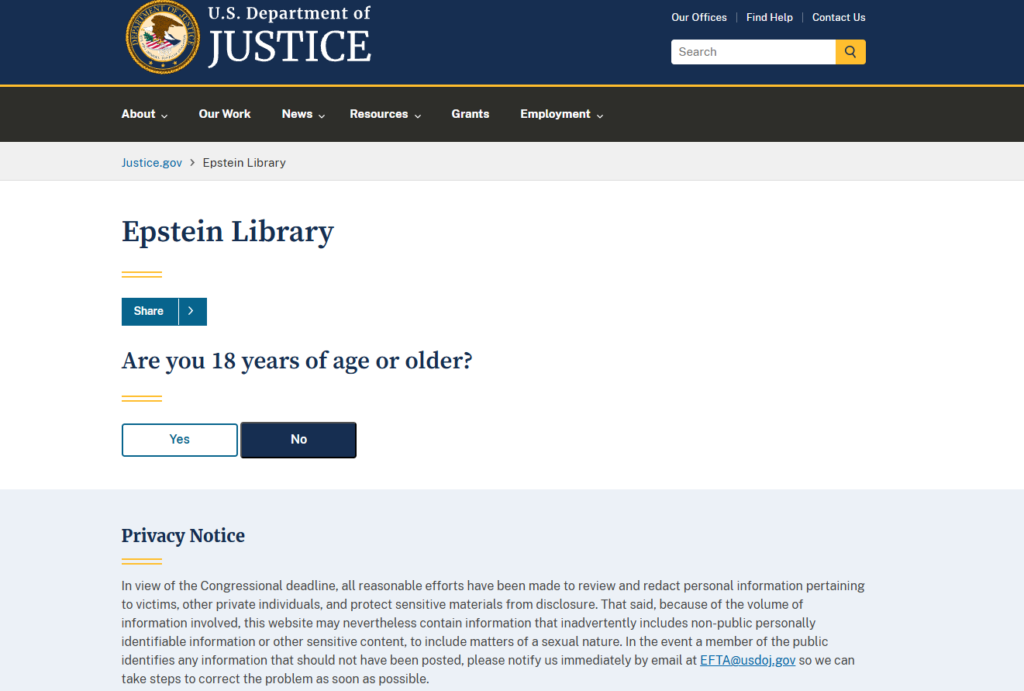
Because the January 30, 2026 release contains sexually explicit materials recovered from Epstein’s devices as required by the Transparency Act, the DOJ requires visitors to confirm they are at least 18 years old before accessing certain data sets. Click to confirm your age to proceed.
Step 3: Navigate to the DOJ Disclosures page
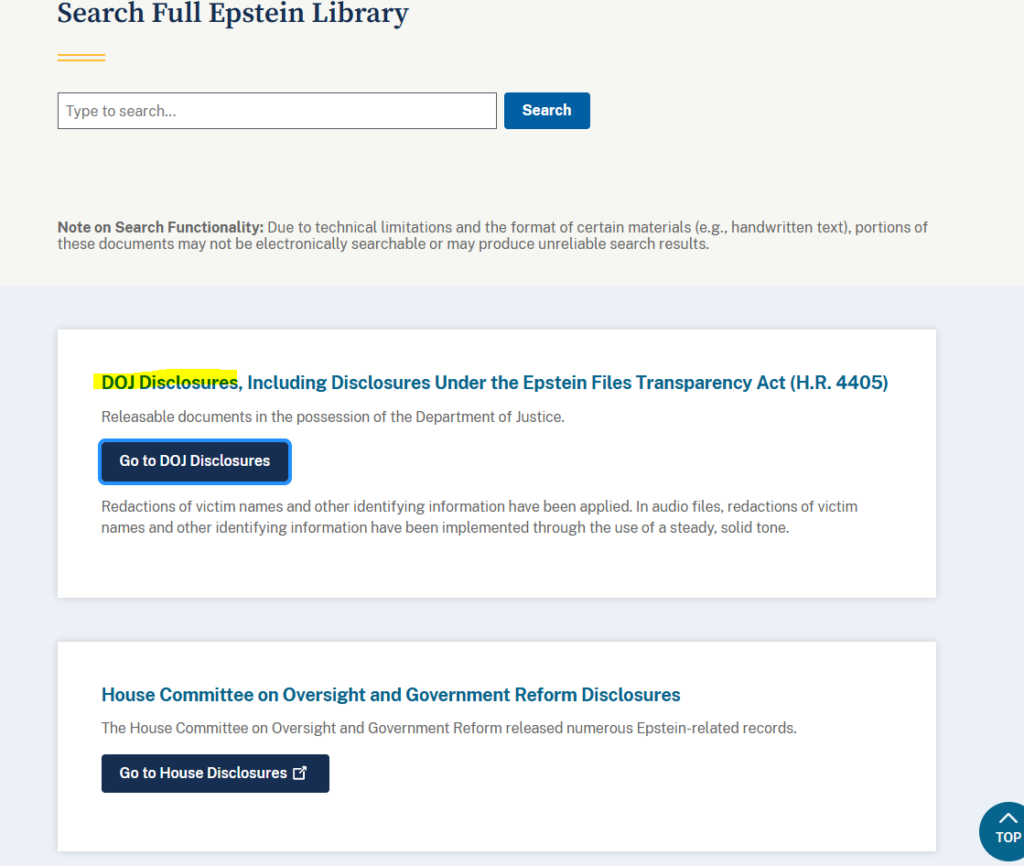
For the full organized library of court cases, civil suits, and investigative files, look for the DOJ Disclosures section within the Epstein library. This page contains all previously released files consolidated in one place, including records from the former FOIA section of the DOJ library.
Step 4: Use the search bar
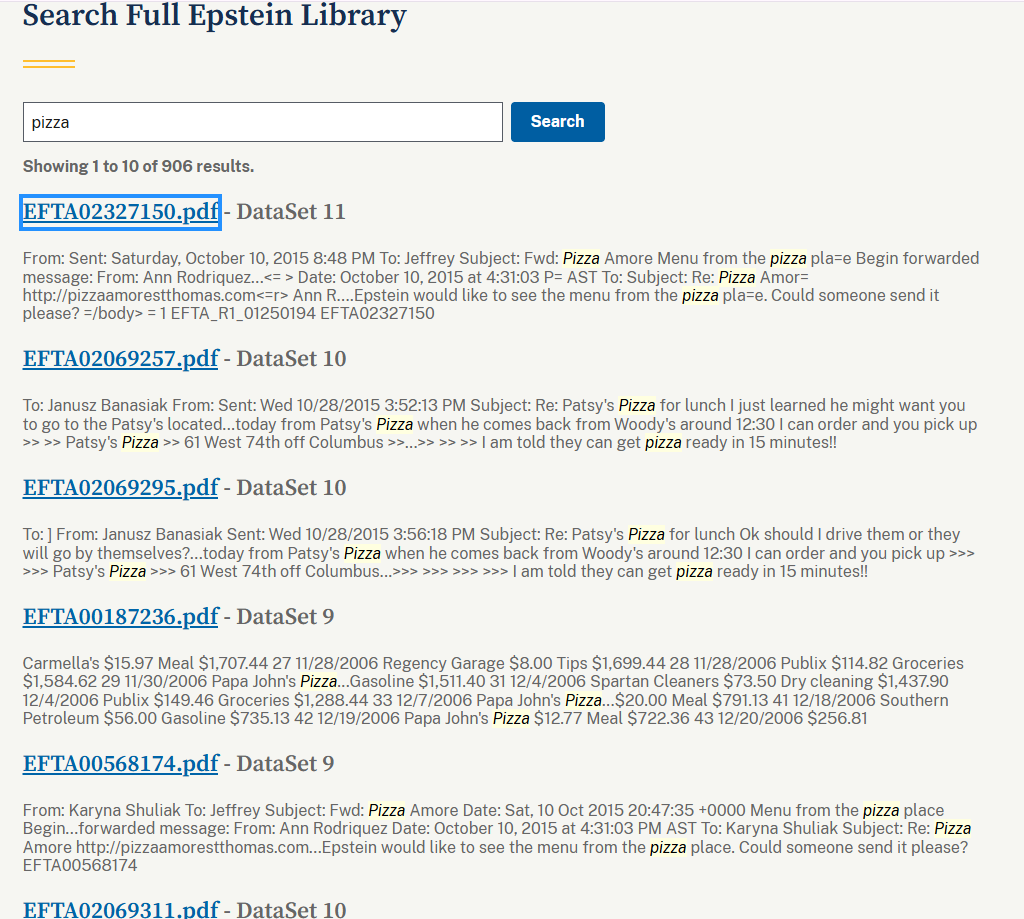
The files on the DOJ website include a search bar labeled “Search Full Epstein Library.” Note that some documents may not be electronically searchable or may produce unreliable search results, as the DOJ itself acknowledges. Use specific search terms to find what you are looking for. Searching for names, dates, locations, or case numbers will help you filter through the massive volume of material.
Step 5: Download documents
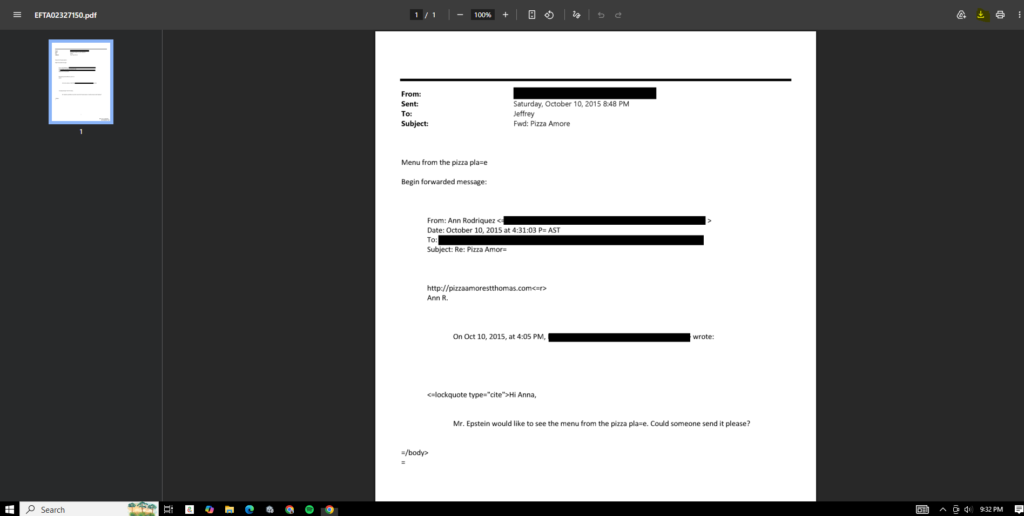
Individual documents and entire data sets can be downloaded directly from the DOJ website in PDF format. For bulk downloads, use the dataset download links provided on the page for each data set category.
Method 2: House Oversight Committee Documents
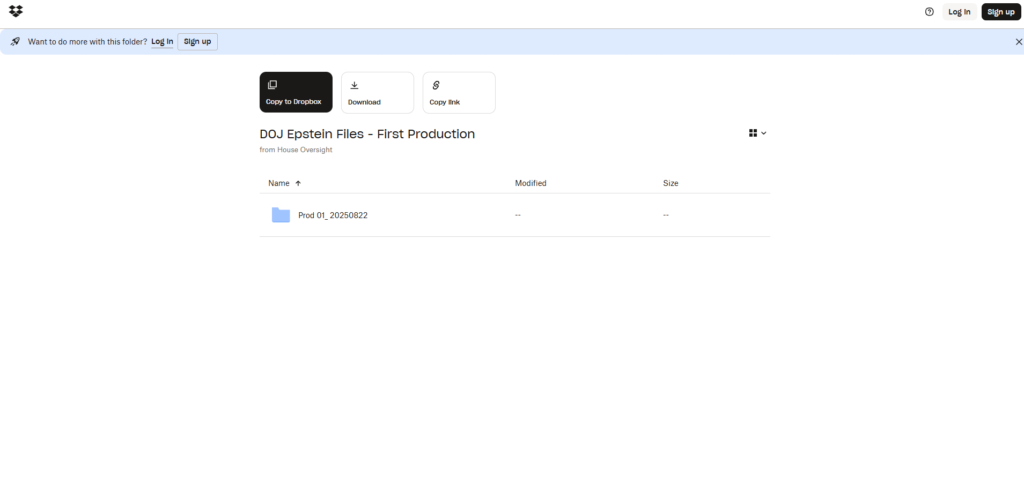
The House Committee on Oversight and Government Reform also independently released tens of thousands of pages obtained through its congressional subpoena. Go to the official House Oversight Committee website and search for “Epstein” in the press releases or documents section to find the September 2025 release of 33,295 pages. The committee’s release is separate from the DOJ library and contains some documents not duplicated in the main DOJ release.
Method 3: Third-Party Search Tools
Because the DOJ’s own search functionality has limitations, several independent tools and platforms have been built by journalists and developers to make the Epstein files easier to navigate.
The DOJ’s massive file dumps came without warnings, context, or descriptions, causing widespread concern among the public with many deeming the files inaccessible and difficult to navigate without additional support tools.
In response, several news organizations and independent developers built their own search interfaces over the released documents. Searching for “Epstein files search tool” on major news websites will lead you to platforms built by outlets like Axios, The New York Times, Al Jazeera, and others that provide more intuitive document browsing experiences than the raw DOJ interface.
What the 12 Data Sets Contain
The released files are organized into 12 separate data sets. Here is what each section covers so you can navigate directly to what you are looking for.
Data Sets 1 through 8 contain the bulk of FBI interview summaries and police reports from Palm Beach, Florida, between 2005 and 2008.
Data Set 9 contains email evidence, including private correspondence between Epstein and high-profile individuals, as well as internal DOJ correspondence regarding the 2008 non-prosecution agreement that granted broad federal immunity to Epstein and his potential co-conspirators.
Data Set 10 contains 180,000 images and 2,000 videos seized from Epstein’s properties. These materials are heavily redacted, featuring numerous blacked-out sections that the DOJ says are in place to protect potential victims.
Data Set 11 contains financial ledgers, flight manifests to Epstein’s island in the US Virgin Islands, and property seizure records.
Data Set 12 contains late productions and supplemental items of approximately 150 documents that require more detailed legal review.
What Types of Documents Are in the Epstein Files?
The released files span a wide range of document types. Here is what you can expect to find when browsing the library.
FBI Interview Summaries. Detailed records of witness and victim interviews conducted by the FBI during the investigation into Epstein’s trafficking network, primarily from the Florida investigation between 2005 and 2008.
Flight Logs and Travel Records. Manifests showing who traveled on Epstein’s private aircraft, to which destinations, and on which dates. These records have been among the most scrutinized documents in the entire release.
Financial Records. Bank statements, wire transfer records, and financial ledgers documenting Epstein’s wealth, payments, and financial relationships with associates.
Email Correspondence. Private emails between Epstein and high-profile individuals across business, politics, and academia, as well as internal DOJ emails about prosecution decisions.
Police Reports. Original Palm Beach Police Department reports from the 2005 to 2008 investigation that led to Epstein’s first prosecution and controversial plea deal.
The 2008 Non-Prosecution Agreement. The controversial deal that granted Epstein and unnamed co-conspirators broad federal immunity, which became one of the most debated documents in the entire release.
Death Investigation Records. Documentation of Epstein’s detention and death, including incident reports, witness interviews, medical examiner files, autopsy reports, and written records detailing the circumstances and cause of death.
Property and Seizure Records. Records related to Epstein’s properties including his private island Little Saint James in the US Virgin Islands.
What Has Been Redacted and Why
Not everything in the files is fully visible. Understanding what was redacted and why helps you interpret the documents accurately.
The Department of Justice provided clear instructions to reviewers that redactions were to be limited to the protection of victims and their families. Some pornographic images, whether commercial or not, were redacted, as the Department treated all women in those images as potential victims. Notable individuals and politicians were not redacted in the release of any files.
Consistent with the December 19, 2025 release guidelines, the Department also withheld or redacted files covered by various legal privileges including deliberative-process privilege, the work-product doctrine, and attorney-client privilege. In total, approximately 200,000 pages have been redacted or withheld based on these legal privilege protections.
Faulty redaction techniques in the December 2025 release allowed members of the public to recover blacked-out content, revealing information that officials had intended to withhold from public viewing. Social media users discovered that blacked-out text in certain documents could be revealed by copying and pasting it into another application. The DOJ subsequently reviewed and corrected the affected documents.
How Many Files Have Been Released vs. How Many Exist?
While the Department of Justice acknowledged that a total of 6 million pages might qualify as files required to be released, it stated that the January 30, 2026 release would be the final one and that it had met its legal obligations. Lawmakers including Representative Ro Khanna disputed this, noting that the department had identified over 6 million pages as potentially responsive yet released only approximately half that amount.
The publication of the Epstein files led to significant political consequences, including the resignations of several prominent public figures and politicians, as well as the arrests of Peter Mandelson and Andrew Mountbatten-Windsor. In April 2026, Trump fired Attorney General Pam Bondi reportedly due to her handling of the Epstein files. Two weeks later, Acting Attorney General Todd Blanche said the Justice Department had released everything the law required.
The Justice Department’s Office of the Inspector General announced it would review the DOJ’s compliance with the law and write a public report.
Tips for Navigating the Epstein Files Effectively
The sheer volume of documents, nearly 3.5 million pages, makes it impossible to read everything. Here are practical tips for finding what you are looking for efficiently.
Use specific search terms. The DOJ search bar works better with specific names, dates, case numbers, or locations than with general terms. Try searching for specific individuals, locations like Palm Beach or Little Saint James, or specific case numbers from the DOJ disclosures index.
Start with the data set index. Before diving into raw documents, review the data set descriptions to identify which of the 12 data sets is most likely to contain the information you want. This saves significant time.
Use third-party tools. Independent search tools built by journalists index the same public documents but with better search functionality and document previews. News organizations have published these tools alongside their investigative coverage.
Focus on key document types first. Flight logs, the 2008 non-prosecution agreement, FBI interview summaries from Data Sets 1 through 8, and the financial records in Data Set 11 are the most cited and referenced documents in news coverage and are a logical starting point.
Download and save documents locally. The DOJ website has experienced periods of high traffic and temporary outages. Downloading PDFs of documents you want to examine in detail is more reliable than relying on the web viewer alone.
Cross-reference with reputable news coverage. Major investigative journalism outlets including the Miami Herald, The New York Times, Reuters, and Al Jazeera have published detailed analyses of key documents. Reading their coverage alongside the raw files provides important context that the documents alone do not always make obvious.
Important Warnings When Viewing the Epstein Files
Age verification is required. The January 2026 release contains sexually explicit material recovered from Epstein’s devices. The DOJ requires age confirmation before granting access to those data sets.
Be cautious about misinformation. Online commentary about the Epstein files has been rife with false accusations and misinformation. Influencers and social media accounts have made claims that are not supported by the actual documents. Always verify claims against the original source documents rather than relying on social media summaries or second-hand interpretations.
Understand the context of redactions. A heavily redacted page does not necessarily mean something sinister is being hidden. Victim protection is the primary stated reason for most redactions, and the law specifically required protecting victim identities throughout the entire release.
Emotionally difficult content. The files document serious crimes including the sexual abuse and trafficking of minors. Readers should be aware that the content of many documents is deeply disturbing. Approach the material with that awareness and take breaks as needed.
Frequently Asked Questions About Viewing the Epstein Files
Where can I view the Epstein files released by the government? The official source is the DOJ Epstein Library on the official Department of Justice website. Search for “DOJ Epstein Library” or “Justice.gov Epstein” on Google to find the official page. All files released under the Epstein Files Transparency Act are hosted there at no cost.
Are the Epstein files free to access? Yes. All government-released Epstein files are completely free to access and download from the official DOJ website and the House Oversight Committee website.
How many pages of Epstein files have been released? As of April 2026, approximately 3.5 million pages have been released by the DOJ under the Epstein Files Transparency Act, in addition to the 33,295 pages released by the House Oversight Committee in September 2025.
Do I need to create an account to view the Epstein files? No account is required for most of the files. For the January 2026 release containing explicit material, you must confirm you are 18 or older on the DOJ webpage before access is granted.
What is the Epstein Files Transparency Act? It is a law signed by President Trump on November 19, 2025, that required the Department of Justice to publicly release all unclassified records related to Jeffrey Epstein and Ghislaine Maxwell in a searchable and downloadable format within 30 days of the law’s passage.
Are all the Epstein files available to the public? Not entirely. Approximately 200,000 pages were withheld or redacted under legal privilege protections. The DOJ claims to have released all files it was legally required to release, but lawmakers dispute whether all 6 million identified pages have been fully accounted for.
Can I search the Epstein files by name? Yes. The DOJ Epstein Library includes a search bar. Third-party tools built by journalists may offer more reliable search functionality given the DOJ’s own caveat that some documents may not be electronically searchable.
What happened with the faulty redactions? In the December 2025 release, some blacked-out text could be revealed by copying and pasting it into another application, exposing content that officials had intended to redact. The DOJ subsequently reviewed and corrected the affected documents.
What happened after the files were released? The release had significant political consequences. Several prominent public figures resigned, arrests were made, Attorney General Pam Bondi was fired by President Trump in April 2026, and the DOJ Inspector General announced it would review the department’s compliance with the Transparency Act and publish a public report.
Summary
The government-released Epstein files are one of the most significant public document releases in modern American history. Thanks to the Epstein Files Transparency Act signed into law in November 2025, nearly 3.5 million pages of FBI reports, flight logs, emails, financial records, and investigative materials are now freely accessible to any member of the public through the official DOJ Epstein Library.
To view the files, search for the DOJ Epstein Library on Google and navigate to the official Department of Justice website. Use the built-in search tool, navigate by data set, download documents as PDFs, and cross-reference findings against verified news reporting from established outlets to get the most accurate and contextually informed picture of what the files contain.
The release continues to be analyzed by journalists, researchers, legal experts, and oversight bodies working through the massive volume of material. Check the official DOJ Epstein page and the House Oversight Committee website regularly for any supplemental releases, corrections, or Inspector General updates.
Last updated: April 2026. All page counts, release dates, and legal details are verified against official U.S. Department of Justice statements, congressional records, and established news reporting.
Leave a Reply